












Deadline
The deadline to apply for the 2026 Awards for Emerging Excellence is Wednesday, November 13, 2026.
What to Submit
Using the Submission Form, please submit using the following guidelines. Materials requested (required for all prize categories, unless otherwise specified):
• Personal statement (maximum 500 words): In 500 words or less, describe your body of work thus far
• Portfolio: PDF of a maximum of ten pages (must describe your role and others’ roles, if applicable). The portfolio should serve as a summary of the applicant’s body of work to date, and applicants are encouraged to have at least three projects from their career represented in the portfolio. At least one of those projects should be recent or current, allowing the jury to see the current trajectory of the applicant’s work.
• CV (maximum 2 pages)
• One letter of recommendation from an academic or professional contact describing the personal and leadership characteristics that make the entrant deserving of an Award for Emerging Excellence.
Additional Portfolio Requirements for the Architect’s Prize only:
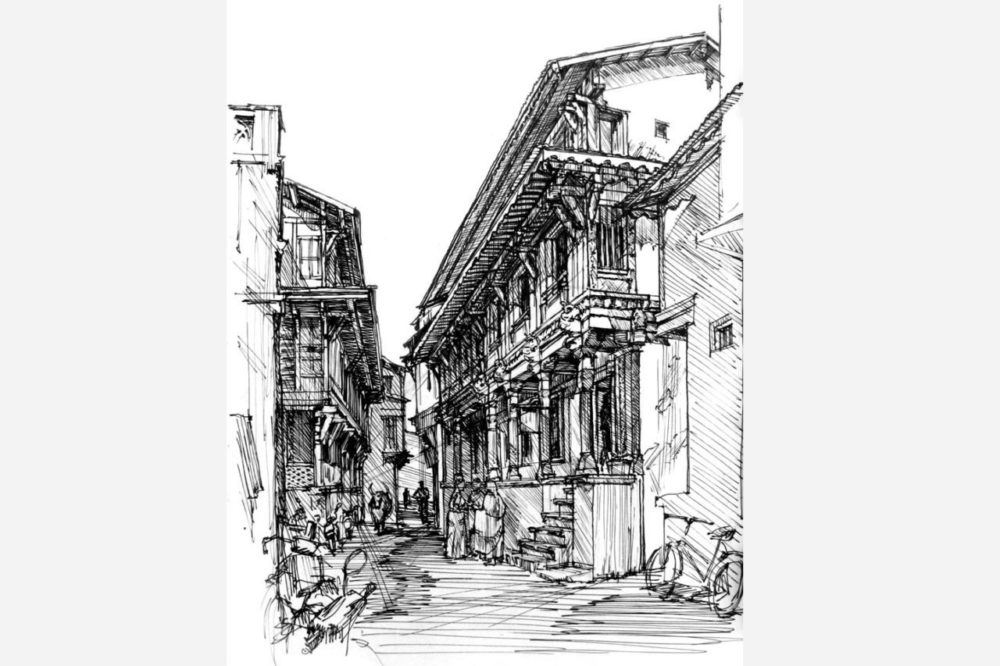
- At least one example of hand drawing is required
- Inclusion of at least one built, completed (or mostly completed) project in the portfolio is highly encouraged
- No more than one student project
Additional Portfolio Requirements for the Bunny Mellon Prize in Garden Design only:
- Planting plans for included projects are required
- Before and after photos of project sites are required
- Inclusion of at least one built, completed (or mostly completed) project in the portfolio is highly encouraged
Additional Portfolio Requirements for the Maker’s Prize only:
- Images of 3 or more projects are encouraged
- In progress images, studio images, and/or fully installed, in situ images are encouraged, as applicable.
- Given the wide variety of work that is eligible for this prize, applicants are encouraged to reach out with individual questions to the ICAA
How to Submit
Please submit your application materials using this submission form. All materials must be submitted using this form, with the exception of the letter of recommendation, which may instead be sent by the recommender via email to [email protected]. The submission deadline for all applications is November 13th, 2026 by 11:59 PM. Incomplete, hard copy, or late submittals will not be considered.
All submitted materials, including but not limited to projects submitted for consideration, written material that accompanies your submission, and any imagery included in your submission must be produced without the use of generative Artificial Intelligence. By submitting your work for consideration, you are attesting that your submitted work, written materials, and imagery has not been created, altered, or edited by AI.
Eligibility
Architects, garden and landscape design professionals, interior architects, urban planners, building craftspeople, artisans, and interested people from all over the world can participate in this award. All entrants must have been 35 years old or younger by January 1st of the prize year.
Assessment Criteria
In addition to the merits of the personal statement and personal credentials, the jury will look for exceptional skill in the applicant’s chosen field, as demonstrated in their portfolio. Theoretical and practical merit will therefore determine the selected entrant.
Juries are kept confidential, and rotate each year. Each jury will contain a mix of professionals across the fields of architecture, landscape design, and craftsmanship. Winners are selected after extensive jury discussion, and key characteristics the jury will be assessing submissions can include:
- Clear understanding of the principles of classical design, including but not limited to: proportion, scale, beauty, ornament, the orders, walkable city planning.
- Awareness of historic precedents and local vernacular traditions
- Forward thinking projects that demonstrate a sensitivity to current issues facing the built environment, including but not limited to: housing insecurity, sustainability, preservation of vernacular traditions, accessibility, design justice, furthering historic crafts and trades
- Strength in communication- a clearly organized portfolio, and a well articulated personal statement that demonstrates the applicant’s strengths and their future aspirations
Should the jury hope to learn more about a finalists’s work, finalists will be contacted for interviews.
The Winning Entrant
Each prize under the Awards for Emerging Excellence has its own recognitions.
The Architect’s Prize: will receive a $2,000 cash prize, and the winner will be formally honored in conjunction with the ICAA’s planned Arthur Ross Awards weekend with a free ticket for themselves and one guest. The winner is expected to attend, with a travel stipend included. Additionally, the winner's work will be recognized via the ICAA's digital platforms and publications.
The Bunny Mellon Prize: will receive a $2,000 cash prize, and the winner to be formally honored in conjunction with the Bunny Mellon Garden Symposium with a free ticket for themselves and one guest. The winner is expected to attend, with a travel stipend included. Additionally, the winner's work will be recognized via the ICAA's digital platforms and publications.
The Maker’s Prize: will receive a $2,000 cash prize, and the winner will be formally honored in conjunction with the ICAA’s planned Arthur Ross Awards weekend with a free ticket for themselves and one guest. The winner is expected to attend, with a travel stipend included. Additionally, the winner's work will be recognized via the ICAA's digital platforms and publications.
Requirements
The ICAA reserves the right to publish, electronically post, distribute to media outlets, or display at its national headquarters images of the projects of the winners. Images may be used in future promotion for subsequent application rounds. Such work results will remain the property of the entrant but permission to so reproduce or display both by the ICAA and other media outlets must be granted by the prize recipient upon receiving the prize; decisions about where and how to so show will be made by Institute staff in partnership with the Prize jury. Entrants must have publishable images ready to provide to the ICAA for distribution upon receipt of the prize, with all necessary permissions secured. It is the responsibility of the ICAA to cover any and all related display costs as deemed most appropriate.
About the ICAA
The Institute of Classical Architecture & Art’s (ICAA) mission is to advance the appreciation and practice of the principles of traditional architecture and its allied arts by engaging educators, professionals, students, and enthusiasts. The ICAA is headquartered in New York City with regional Chapters across the United States. It offers a wide array of programs that are designed to promote the appreciation and practice of classical and traditional design, including classes, travel, lectures, and conferences. It publishes an academic journal called the Classicist as well as the acclaimed book series called the Classical America Series in Art and Architecture. The ICAA’s Arthur Ross Award annually recognizes and celebrates excellence in the classical tradition internationally. The ICAA was honored to bestow an Arthur Ross Award on HRH The Prince of Wales in the Patronage category in 1990.
About INTBAU
INTBAU was established in 2001, and has since gained 40 chapters and 9,000 members in over 100 countries worldwide. We work under the patronage of our founder, His Majesty King Charles III. INTBAU’s mission is to support traditional building, the maintenance of local character, and the creation of better places to live. We do this through workshops, summer schools, study tours, conferences, awards, and competitions. Our three objectives are to research, educate, and engage as widely as possible on the value and relevance of traditional architecture and urban design. INTBAU is a unique, established resource for global knowledge of traditional architecture and urban design. Our active network consists of individuals and institutions who design, make, maintain, study, or enjoy traditional buildings and places.
About The King's Foundation
The King's Foundation (formerly known as The Prince's Foundation) was created in 2018, as a result of the consolidation of four existing charities, The King's Foundation for Building Community, The King's Regeneration Trust, The Great Steward of Scotland's Dumfries House Trust, and The King's School of Traditional Arts.
The King's Foundation by focusing on three core tiers - Education, Projects, and Attractions - delivers work to improve the built environment, save heritage, and promote culture and education. Through education The King's Foundation aims to create sustainably planned, built, and maintained communities, championing and celebrating the most important part of any community: its people. The charity continues to train a generation of architects, masterplanners, and placemakers, in order to ensure the continuation of the kind of timeless skills which have been developed over generations.
About The Gerard B. Lambert Foundation
The Gerard B. Lambert Foundation was founded by renowned horticulturalist Bunny Mellon in 1976 in honor of her father, Gerard Barnes Lambert, for his many contributions to the arts and landscape. Today, the Foundation carries on Mr. Lambert’s legacy and Bunny’s vision through supporting organizations such as the ICAA – with this partnership forming the Bunny Mellon Curricula. The grant from the Foundation to the ICAA made it possible for the development of a holistic curriculum in landscape architecture to expand its reach and enhance its programming for designers, students, and enthusiasts, with particular emphasis on the next generation. Together, the programs made possible via the Curricula allow audiences to obtain a deeper understanding of the importance of gardens and landscape as part of the overall built environment.